A poem carries meaning in its shape: where the lines break, where the stanzas sit, where the white space is. A browser, left to itself, treats all of that as suggestions.
This guide covers preserving the shape, indentation, and the submission question.
Why the breaks move
Text in a browser wraps to the width available. A line longer than the screen breaks wherever it happens to fit.
The reader now sees two lines where you wrote one, with no way to tell which breaks are yours. For a poem, that is not a formatting inconvenience; it changes the work.
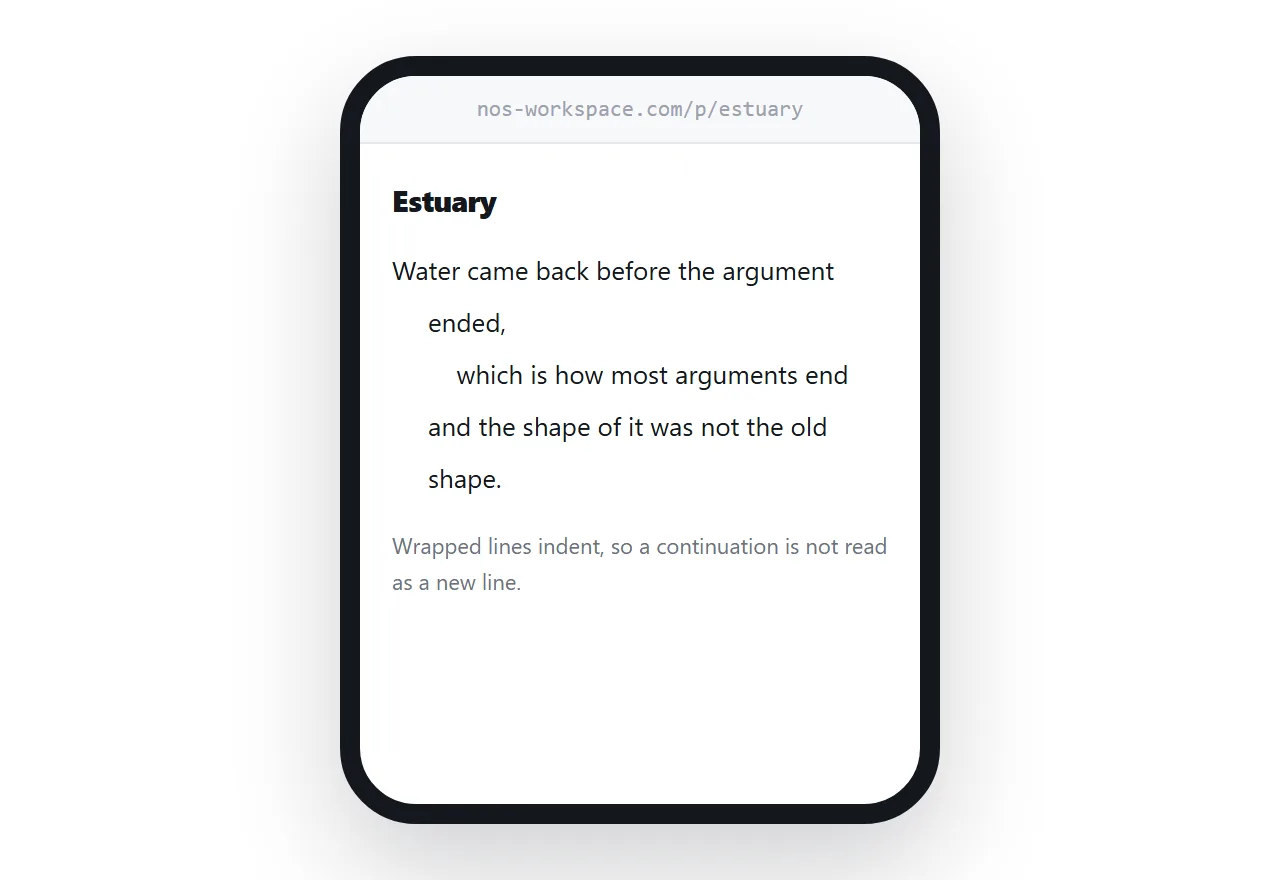
The fix is to mark the text so breaks are preserved, and to make wrapped lines visually distinct.
.poem {
  white-space: pre-wrap;
  padding-left: 2rem;
  text-indent: -2rem;
  max-width: 34rem;
}
The pre-wrap setting keeps your line breaks and still wraps lines too long for the screen. The negative indent pulls the first line of each back out, so a wrapped continuation appears indented and a reader can see immediately that it is not a new line.
The measure keeps the lines from running longer than is comfortable on a wide screen.
Indentation and positional work
The same setting preserves leading spaces, so indented lines and stepped stanzas survive.
Work that is genuinely positional, where words sit at particular places across the page, is harder. A narrow screen cannot reproduce a wide arrangement at a readable size.
For those, an image of the poem at its correct arrangement, with the text also available for screen readers and for copying, is the honest answer. Not ideal, and better than a rearranged poem.
| Default text | With breaks preserved | |
|---|---|---|
| Your line breaks | Ignored | Kept |
| Indentation | Collapsed | Kept |
| Wrapped lines distinguishable | No | Yes, if indented |
| Works on a narrow screen | Yes | Yes |
One address per poem
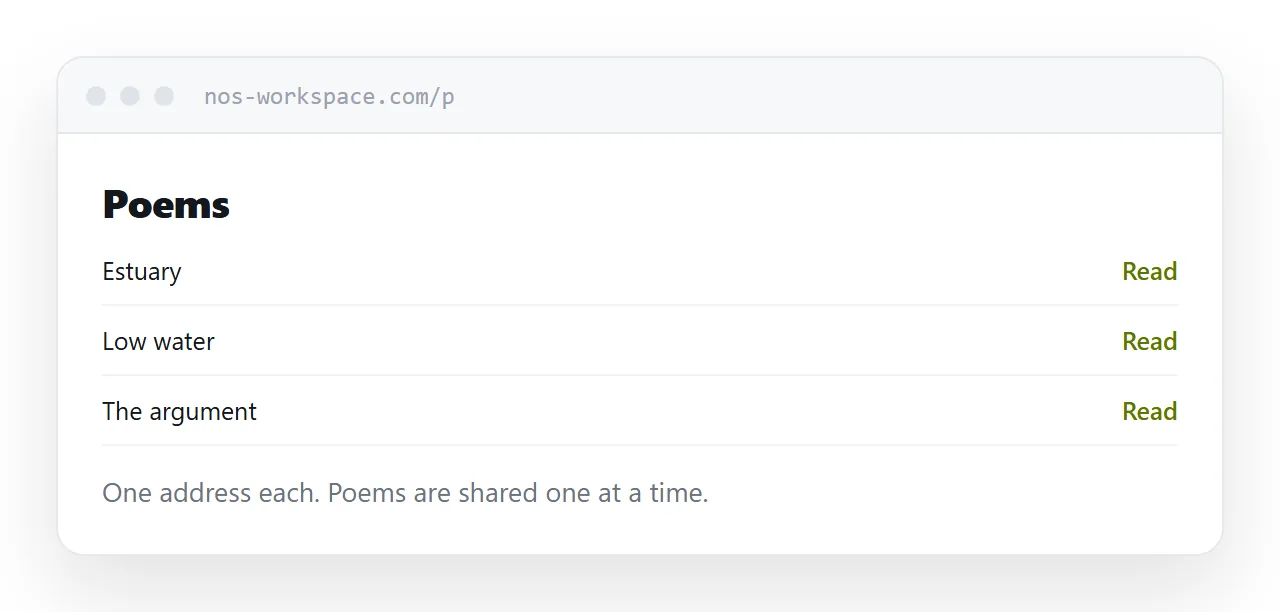
Poems are read one at a time, shared one at a time, and found one at a time.
An address per poem means someone can send exactly the poem they mean, someone searching a line can arrive at it, and you can link it from anywhere without explaining where to scroll.
A collection page links them and holds the order. That page is the book.
Typography
Poems are read slowly and reread.
A comfortable measure, generous line spacing, and a font size on the larger side. Plenty of space around the poem, because white space is part of the reading rather than wasted room.
Resist decorative typefaces. The poem is doing the work.
Submissions
Most journals treat a publicly readable page as previously published, which makes the poem ineligible.
If you intend to submit, either keep the poem at an unlisted address that is not linked from anywhere, or hold it back until it is placed.
Policies differ and some accept work published on a personal site. Read the guidelines rather than assuming, because this is a mistake that cannot be undone.
For the surrounding ground, see How to share a poem as a link and How to share a short story as a link.
Put it at an address
Preserve the line breaks, indent wrapped lines so continuations are visible, give each poem its own address, set generous typography, and keep work you intend to submit unlisted.
Then the poem on the screen is the poem you wrote.