The faults in publishing a site are all in publishing, and publishing is the step most people leave until the end.
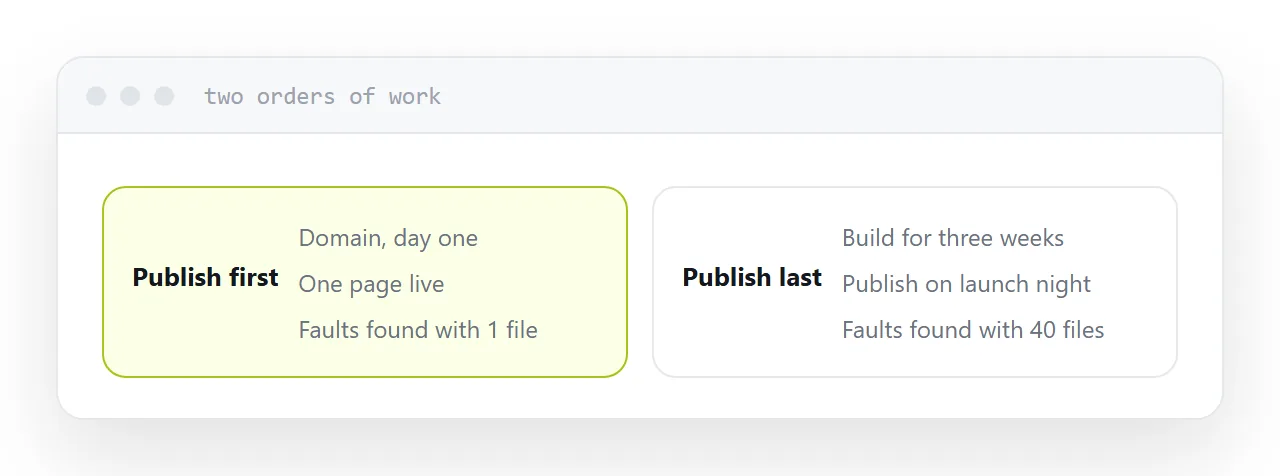
Publish first
Register the domain. Put one page at it, even a holding page. Confirm it loads on a phone.
That takes an afternoon, and it exercises every part of the chain: the registrar, the record, the host, the certificate, the upload route.
Everything that goes wrong goes wrong now, while there is one file and no deadline. The alternative is discovering the same faults the night before launch with forty files and an announcement scheduled.
| Order | When faults appear |
|---|---|
| Publish first | Day one, with one file |
| Publish last | Launch night, with everything |
What differs between local and live
Four things, reliably.
Absolute paths. A path starting with a slash resolves to the root of the domain. Locally that is your working folder, live it is somewhere else, and the page arrives unstyled.
Capitalisation. Your machine probably ignores it and the server will not. Images referenced with the wrong case vanish in a pattern that looks random.
Missing files. A font, a favicon, one image in a subfolder. Present locally, never uploaded, and the failure is silent.
Development conveniences. The tool you built in supplies things a plain server does not. Those absences only show up live.
None are visible before publishing. All are obvious within thirty seconds of publishing.
Keep it private if you want
Publishing early does not mean showing an unfinished site to the world.
Use a temporary address, or put a password on it, or leave a holding page at the domain while the real pages sit at a hidden address. Any of those keeps the route exercised without exposing work in progress.
The point is the route, not the audience.
The final check
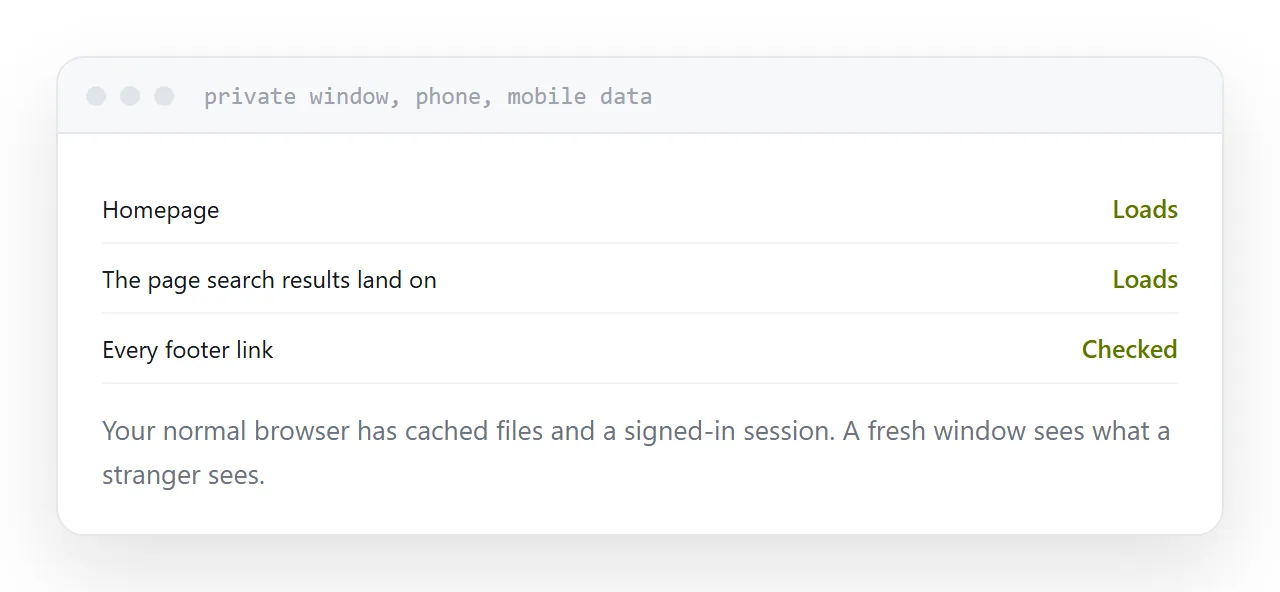
Before announcing anything: open the live address on a phone, on mobile data, in a private browser window.
Private matters because your normal browser has cached files, remembered addresses and possibly a signed-in session. A fresh window sees what a stranger sees.
Click every link, including the footer. Check the page that people will land on from a search result, not just the homepage.
Then announce
Announcement last, after the live version has been checked on a real device.
The order is unglamorous and it is the difference between launching and firefighting.
If this is near what you are doing, How to host a website and How to turn an HTML file into a website cover the cases on either side.
Put it at an address
Register the domain before building, publish one page to it immediately, build against the live address, check on a phone in a fresh browser, and announce only after that.