A hosted learning platform is administration software sold per learner. Two things decide whether it is a good purchase, and neither is in the feature comparison.
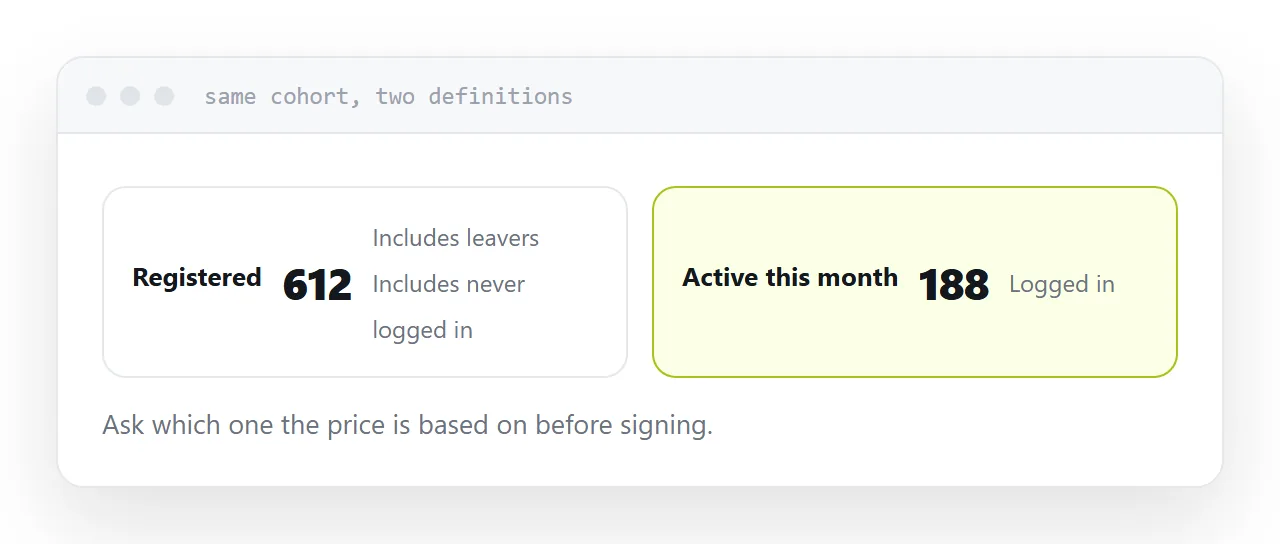
Registered or active
This is the first question and it changes the price substantially.
Registered counts everyone with an account. Including people who completed a course two years ago, people who left the organisation, and people who were enrolled and never logged in.
Active counts who logged in during the billing period.
The same cohort can differ by a factor of three. A platform priced per registered learner grows in cost even when usage is flat, and cleaning up accounts becomes an administrative task somebody has to own.
Ask explicitly, and ask what happens to dormant accounts.
| Registered pricing | Active pricing | |
|---|---|---|
| Counts leavers | Yes | No |
| Cost with flat usage | Grows | Flat |
| Needs account housekeeping | Yes | Less |
| Predictable | Less | More |
The export question
You are buying a platform for the records. Ask, before signing, whether you can get them out.
Completion dates, scores, certificates issued, by named learner, in a usable format. Not a screenshot, not a report view, an export.
Those records are the one thing that cannot be recreated if you leave. Material can be rebuilt; the fact that a named person completed compliance training in March cannot.
Test the export during a trial rather than believing a sales answer.
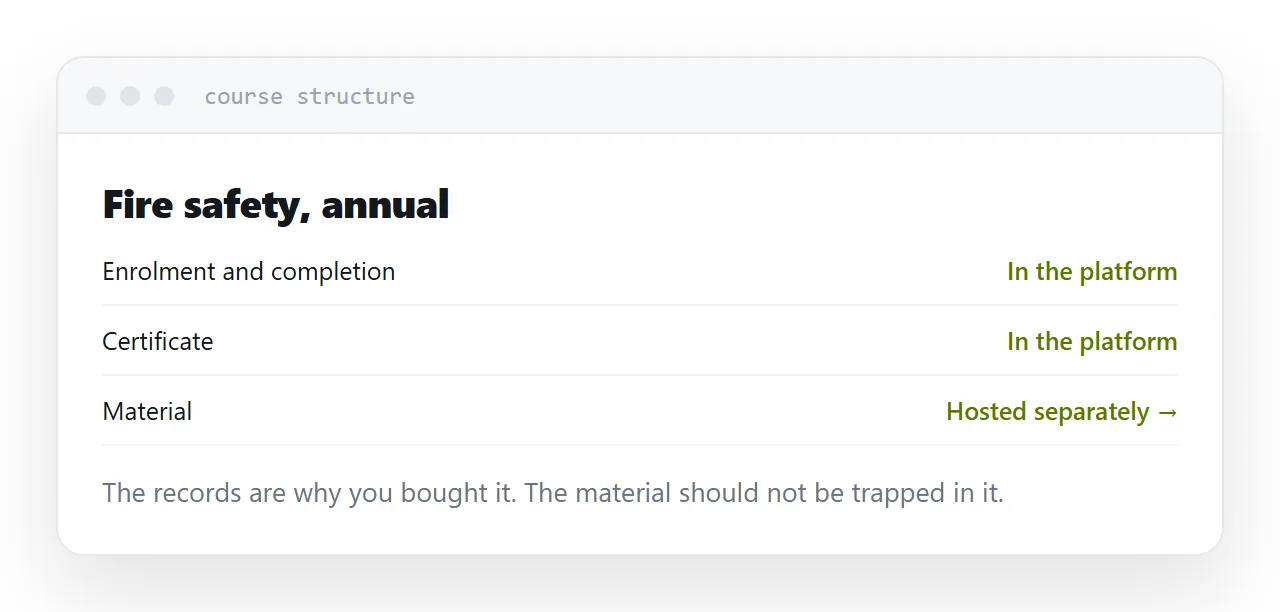
Keep the material outside
The usual trap.
Content authored inside the platform, using its editor, stored in its structure. Two years later, moving means rebuilding every course from scratch, so nobody moves regardless of price increases.
Keep the material at addresses you control and link to it from the course. The platform keeps enrolment, completion and grades; the material stays yours.
That single decision converts a lock-in into a supplier relationship.
Do you need one
Four things justify a platform.
Compliance records somebody may audit.
Certificates learners need as proof.
Grading recorded per learner.
Enrolment at a scale where handing out addresses stops working.
If none apply, pages at addresses and a message channel deliver the same learning with no per-learner cost and no migration risk.
Most internal enablement and most customer education fall here, and buy a platform anyway because a course is supposed to have one.
Closely related: Hosted or self-hosted learning platform, and What a learning management system actually does for the adjacent problem.
Put it at an address
Read whether pricing counts registered or active learners, ask about dormant accounts, test the completion export during a trial, keep the material outside the platform, and confirm you need the records at all.
Then the platform is priced honestly and leaving remains possible.