An invoice has an unusual readership. The person who hired you forwards it to a finance team who have never heard of the project, and they process it against rules you do not know.
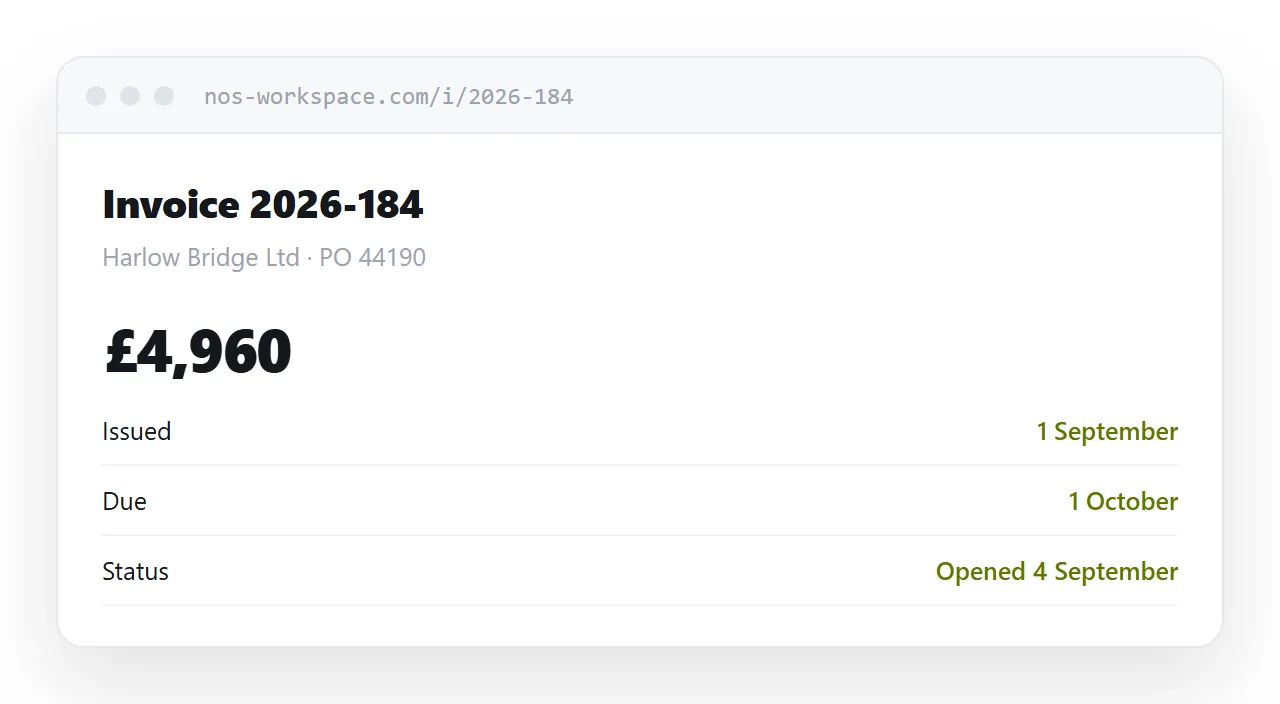
This guide covers what finance needs, the file question, and chasing.
Ask before you invoice
Five minutes at the start of the engagement removes most payment delays.
Do they use purchase order numbers. If so, get it before invoicing. An invoice without one is frequently rejected without anyone telling you.
Which address do invoices go to. Often not your contact, and often a shared inbox rather than a person.
What format do they accept. Some organisations only take files through a portal.
What are the terms in practice. Thirty days often means thirty days from the next payment run.
Ask once, note the answers, and invoicing stops being a source of delay.
Send a file
Accounts systems process files. A page is not something most of them can ingest.
So send a PDF. It goes into their system, gets attached to a record, and satisfies the process.
A page alongside it is useful for the human: it shows the current status, links the PDF, and means you can update the status without sending another email. But the file is the thing their system needs, and fighting that is not a strategy.
| Page alongside | ||
|---|---|---|
| Accounts system accepts it | Yes | No |
| Human can read it on a phone | Downloads | Opens |
| Status visible | No | Yes |
| You know it was opened | No | Yes |
| Correct an error | Reissue | Both, once |
What goes on it
Invoice number, date, your details, their details as their finance team expects them, a description tied to the work they recognise, the amount with tax stated separately, terms, and how to pay.
Put the payment method where it is read rather than in a footer. Bank details in small grey type at the bottom of a page are a recurring cause of somebody emailing to ask how to pay.
Requirements differ by country. Check what yours mandates rather than copying a template.
Chasing, informed
An invoice that was never opened is a delivery problem. It went to the wrong address, or into a filter, or to a person who has left.
An invoice opened and unpaid is a process problem. It is in a queue, or waiting on an approval, or missing something their system wanted.
Those need different messages, and sending the wrong one wastes a week. Knowing which you have is the practical value of the page.
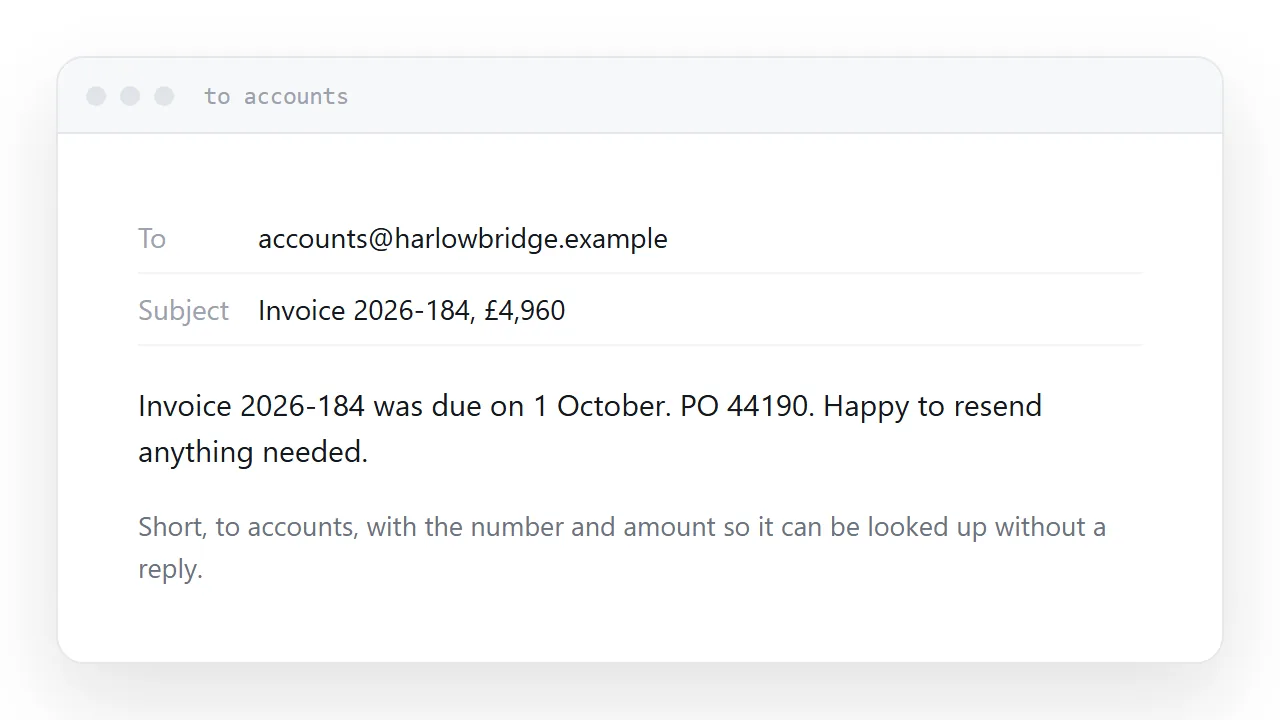
Chase early and to the right person
Most late payment is administrative rather than deliberate. Somebody is away, something was miscoded, an approval is sitting in a queue.
A short message a few days after the due date, sent to the accounts address rather than to your contact, resolves most of it. Include the invoice number and the amount so it can be looked up without a reply.
Escalate to your contact only when accounts has not responded, and keep it factual. The relationship that matters is with the person who hires you again.
Closely related: How to send an invoice as a link, and How to send a quote to a client for the adjacent problem.
Put it at an address
Ask what their accounts team needs before invoicing, send a PDF for their system with a page for the human, put payment details where they are read, check whether it was opened before chasing, and chase early to accounts.
Then payment is a process rather than a negotiation.