A transcript link is a transcript published at an address, so it can be searched in the browser and linked at any specific moment.
Transcripts are reference documents. Everything about presenting one should serve someone looking for a particular thing.
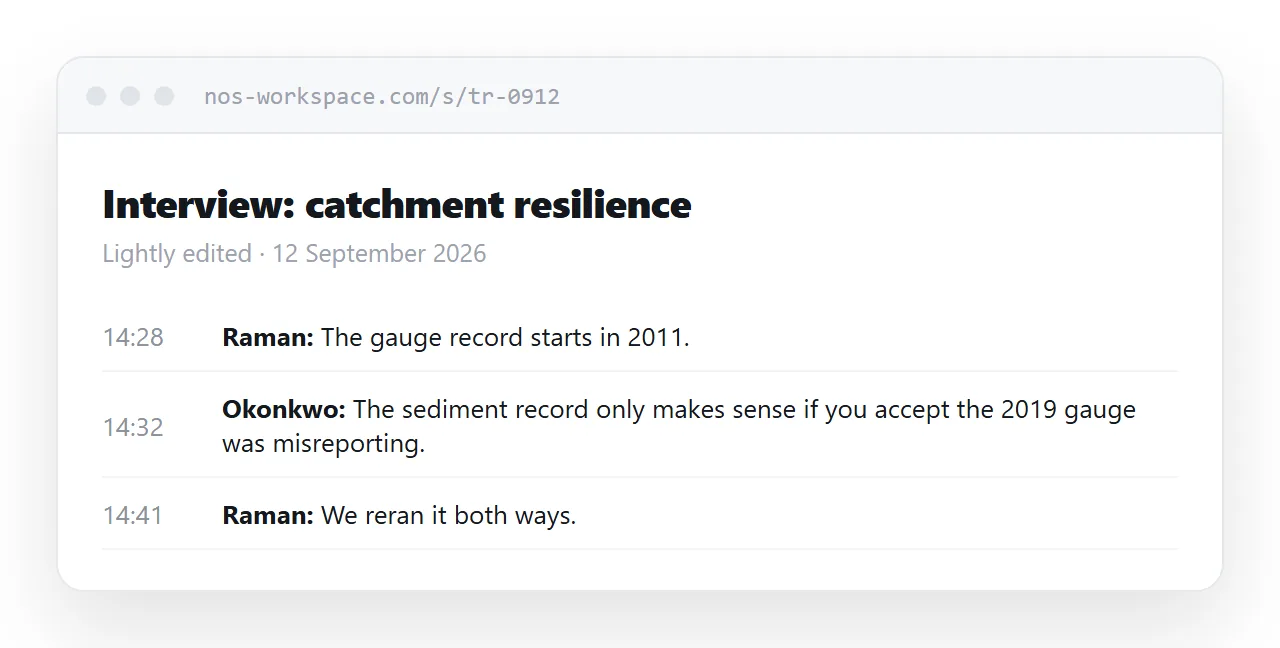
This guide covers linkable timestamps, keeping speakers distinct, the verbatim question, and the consent checks that come before any of it.
Timestamps that can be linked
This is the single feature that makes a transcript useful rather than merely available.
<div class="turn" id="t-14-32">
  <a class="ts" href="#t-14-32">14:32</a>
  <p><b class="spk">Okonkwo:</b> The sediment record only makes sense
     if you accept the 2019 gauge was misreporting.</p>
</div>
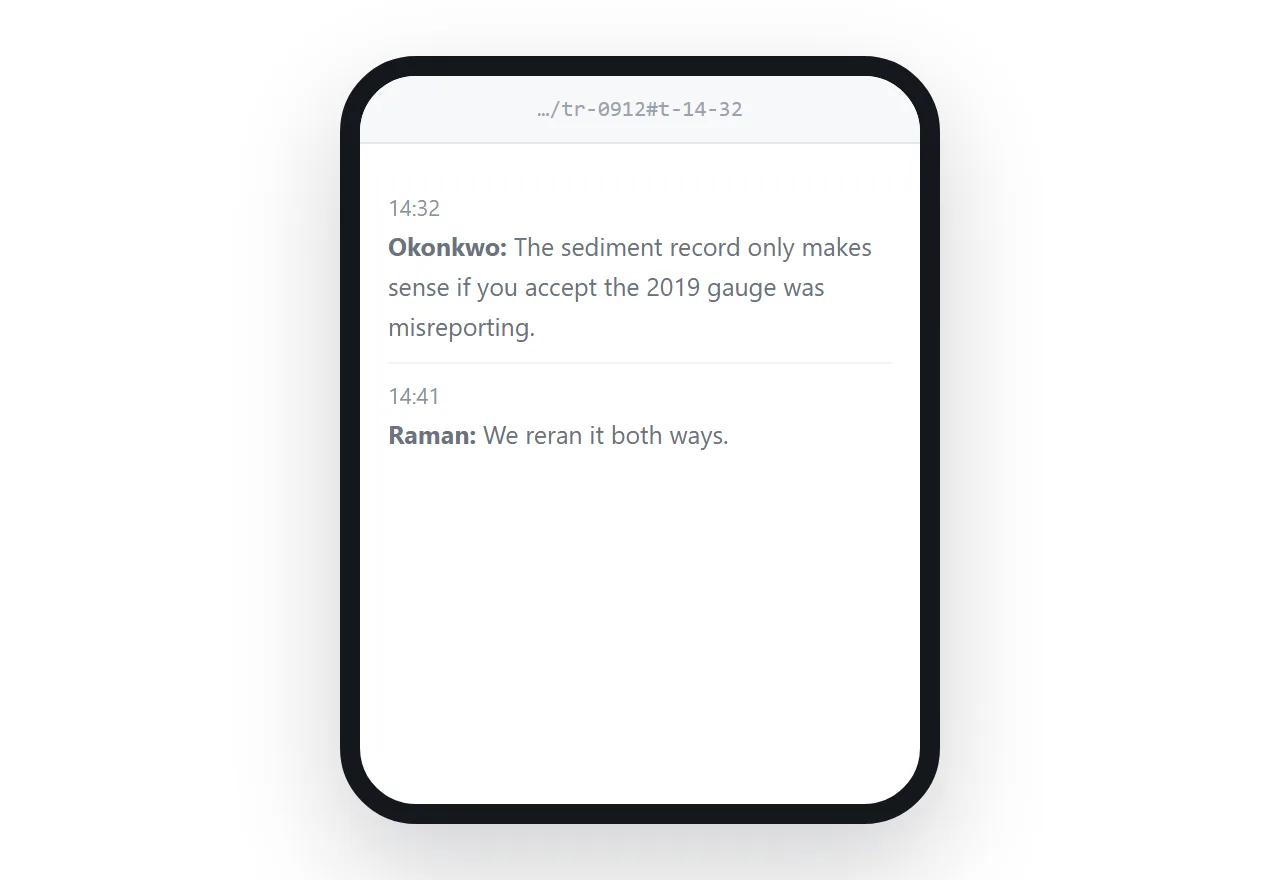
The timestamp is a link to itself, so anyone can copy the address of that moment. "She says it at 14:32" becomes something you send, and the recipient lands on the line rather than scrolling.
For a long interview this changes how the transcript gets used. A journalist checking a quotation, a researcher citing an exchange, a colleague verifying what was agreed: all of them arrive directly.
If you have the audio or video online, make the timestamp link to that position as well, so the reader can hear it.
Speakers have to be distinguishable
A transcript set as plain alternating paragraphs is genuinely hard to follow after a page.
.turn { display: grid; grid-template-columns: 4.2rem 1fr; gap: 0.6rem; padding: 0.5rem 0; }
.turn .ts { color: #8b929b; font-variant-numeric: tabular-nums; text-decoration: none; font-size: 0.85rem; }
.turn .spk { display: inline-block; min-width: 6rem; }
@media (max-width: 640px) {
  .turn { grid-template-columns: 1fr; gap: 0.15rem; }
}
Timestamps in a narrow left column, speaker names in bold at the start of each turn. On a phone the columns collapse and the timestamp sits above the text, which keeps it scannable without squeezing the words.
Use the same name for a speaker throughout. Automatic transcription often alternates between "Speaker 1" and a detected name, and that inconsistency makes a transcript much harder to follow.
Verbatim or edited, decided once
Both are legitimate and mixing them is not.
A verbatim transcript keeps repetitions, false starts, and filler. It is what you want for research, for legal contexts, and any time the manner of speech matters.
A lightly edited transcript removes filler and repairs false starts without changing meaning. It reads far better and is normal for published interviews.
Say which one this is, in a line at the top. A reader quoting you needs to know whether the smoothness is the speaker's or yours.
Mark anything you could not hear rather than guessing. A bracketed note saying the audio was unclear is honest; an invented word is not.
Consent comes first
A transcript is a record of what someone said, and publishing it is a decision about their words rather than yours.
- Get agreement before publishing an interview, and be specific about where it will appear.
- Redact third parties who were discussed but did not consent, including names that appear in passing.
- Check the recording itself was lawful. Consent requirements for recording vary by jurisdiction and by whether the call crossed borders.
- Be careful with internal meetings. Participants who thought a conversation was internal did not agree to publication.
- Consider what is in the room. Client names, salary figures and personal circumstances often appear in transcripts without anyone noticing until later.
Where a transcript is for a small group rather than the public, keep the address unguessable and out of search engines.
Automatic transcription needs checking
Machine transcription is good enough to make a searchable draft and not good enough to quote from.
It fails most on proper nouns, technical vocabulary, and moments when people speak over each other, which are frequently the parts worth quoting. Check anything you intend to publish as a quotation against the audio, and mark uncertain passages rather than leaving a confident-looking error.
Put it at an address
Write the transcript as a page with ids on every timestamp, say whether it is verbatim, check consent, and create a share link.
Then when somebody needs the bit at 14:32, send them 14:32.