A presentation deck is half of a performance. The other half is a person speaking. Send the deck alone and you have sent half.
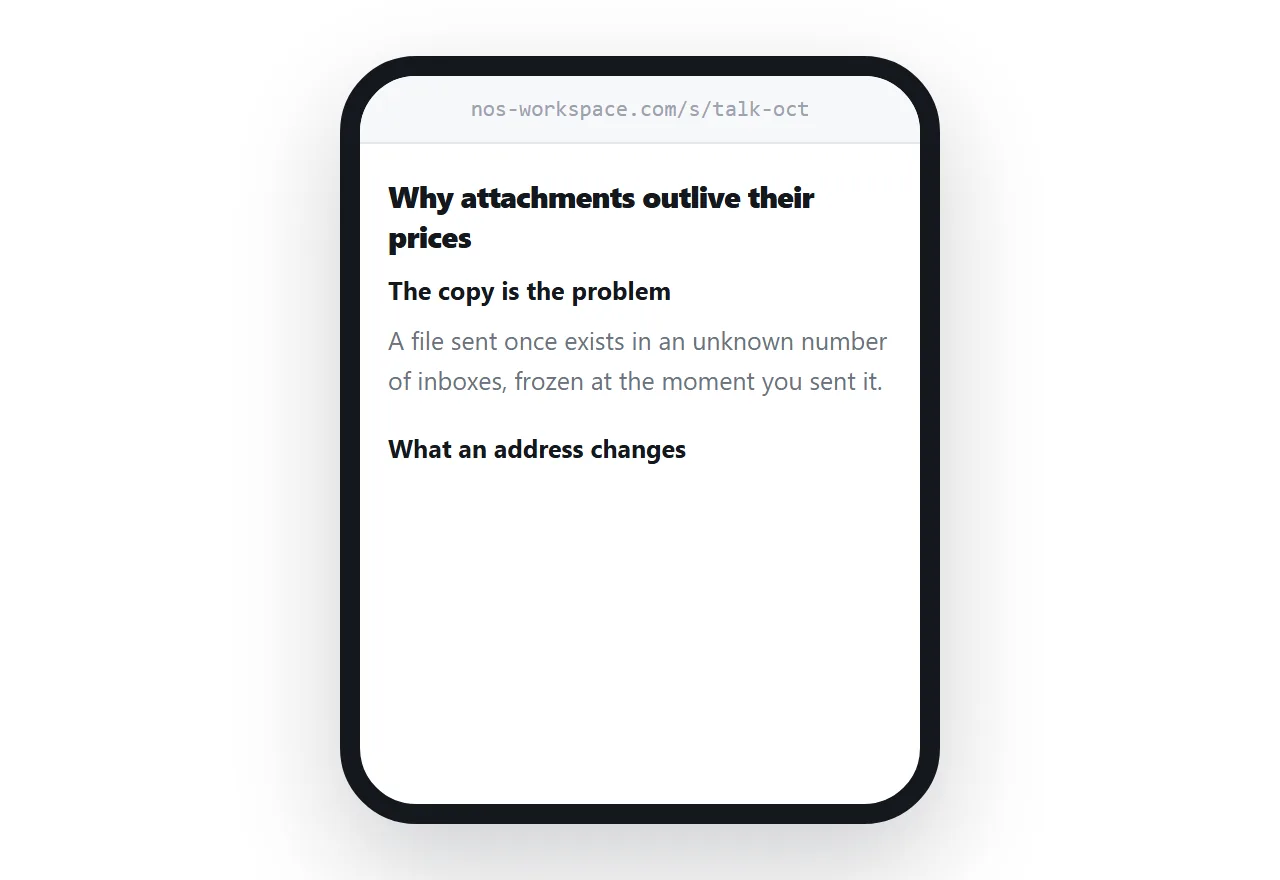
This guide covers building two artefacts, what the reading version contains, and the recording.
The better the deck, the worse it sends
This is the part that catches people out.
A good presentation deck is sparse on purpose. Three words and an image, because the speaker is carrying the argument and the slide is there to anchor it.
Sent on its own, that slide says three words. The reader supplies their own interpretation, which is frequently not yours, and the more disciplined the deck was, the less survives.
Dense decks send slightly better and present much worse. Trying to solve this with one artefact makes both jobs worse.
Two artefacts
The deck, for the room. Sparse, visual, built to be talked over. Unchanged.
A reading version, for afterwards. Same structure, same order, with the argument written out. What you said becomes what it says.
That is more work than exporting the deck, and it is the difference between a follow-up that lands and one that gets skimmed and forgotten.
| Deck exported and sent | Reading version at an address | |
|---|---|---|
| Argument present | In the speaker's head | Written down |
| Opens on a phone | Wide and sparse | Reflows |
| Forwarded internally | Misread | Understood |
| Correct a mistake | New file | Edit the page |
| You can see what was read | No | Yes |
Publish it as a page
Exported slides are a document of wide sparse rectangles. On a phone, each one is scaled to a fraction of a screen designed for a projector.
A page reflows. Headings become the structure, the argument becomes paragraphs, the diagrams stay as images. It reads like something written rather than like a photograph of a meeting.
Keep the deck available as a download for the people who want to present it themselves.
Put the recording in the same place
Someone who missed the session currently receives a deck, a video link and a note explaining which is which.
One address holds all of it. The reading version, the recording embedded or linked, the deck to download, and the answers to whatever was asked at the end.
That last one matters more than it looks. The questions asked in the room are the objections everyone else has too, and answering them on the page does work you would otherwise repeat in email.
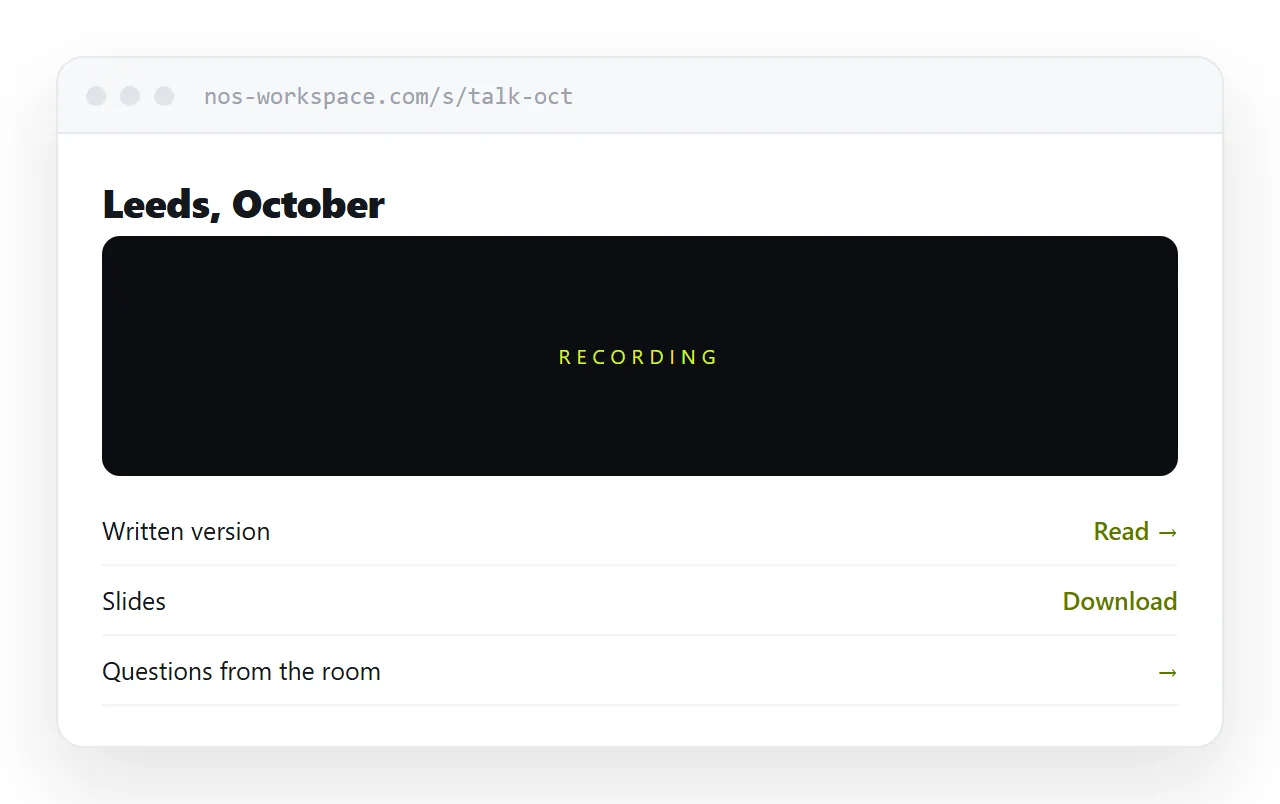
Reading depth tells you where it is weak
An address reports how far people got.
If most readers stop at the same section, that section is where the argument loses them. Not a guess, not feedback from the one person who replied, but where attention actually ended.
Fix that section before presenting it again. It is one of the few genuinely actionable signals available from a document.
For the surrounding ground, see How to share a presentation and How to share a pitch deck as a link.
Put it at an address
Keep the deck for the room, write a reading version for afterwards, publish it as a page rather than as exported slides, put the recording alongside it, and look at where readers stopped.
Then the presentation still works when you are not in the room.