An HTML pitch deck as a page serves the reader who decides outcomes: the one who was forwarded it and opens it on a phone between meetings.
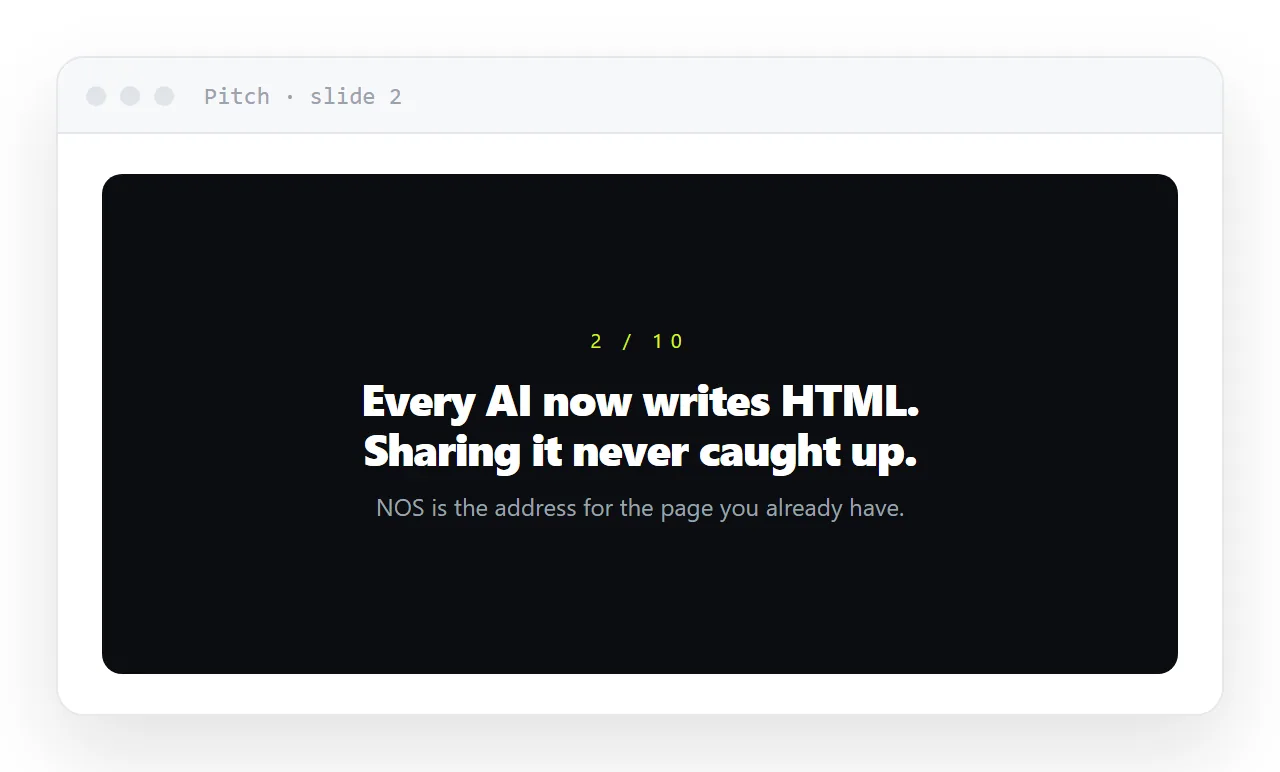
A deck gets presented once and read many times, and a PDF serves the reading case badly, as a stack of small rectangles nobody pinches.
This guide covers why the link wins here specifically, what changes in the design, the reading-order problem, figures with their base, appendix pages, and the four steps to build the deck as a page with a PDF ready.
A pitch deck gets presented once and read many times — forwarded to a colleague, opened on a phone between meetings, glanced at before a call. The reading case is the one that decides outcomes, and a file serves it badly.
Why an HTML pitch deck as a link wins here specifically
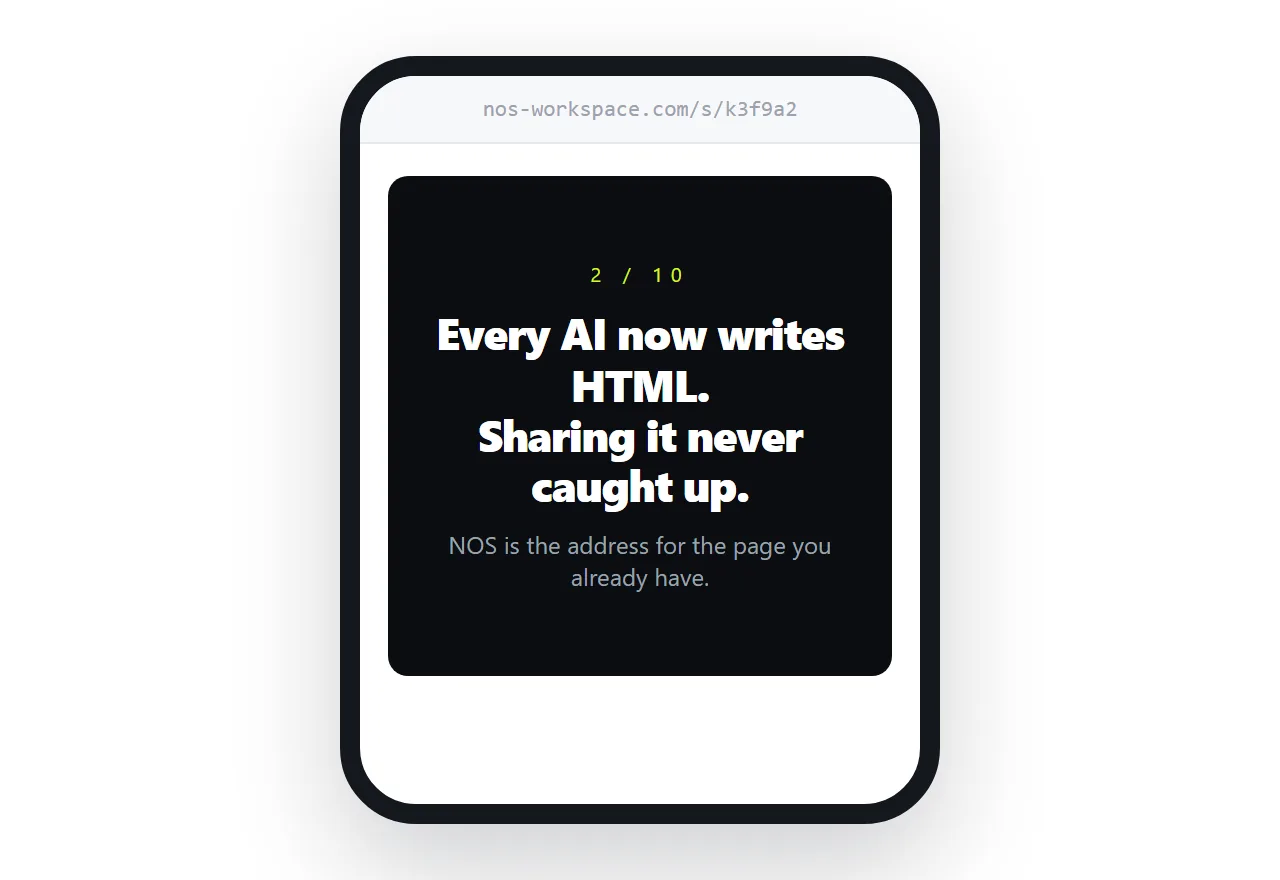
It opens on a phone. A deck file on a phone is a stack of fixed-width rectangles you pinch at. A page reflows.
It survives forwarding. The person it gets forwarded to opens the same page, current as of today — not a copy from three weeks ago with the old numbers in it.
It updates without an awkward email. Your figures change monthly. With a link you correct the page; the deck somebody was sent last month is the corrected one. Without it, you are writing "please use the attached updated deck", which is not the message you want in front of an investor.
It previews properly. Open Graph tags mean the link shows a title and an image in whatever app it is forwarded through, rather than a bare address.
What changes in the design
Do not fix the slide size
.slide {
  min-height: 100svh;
  display: grid;
  place-items: center;
  padding: 7vh 6vw;
}
.slide > * { max-width: 780px; }
svh accounts for phone browser toolbars so a slide is not slightly taller than the visible area. A maximum width on the content keeps lines readable on a large screen.
Snap between slides
.deck { height: 100svh; overflow-y: scroll; scroll-snap-type: y mandatory; }
.slide { scroll-snap-align: start; }
Four lines. Works with a thumb, a trackpad and arrow keys.
Type that scales
h1 { font-size: clamp(26px, 5.5vw, 46px); }
.figure { font-size: clamp(32px, 7vw, 60px); }
One line per element instead of a set of breakpoints, and it means the deck is legible both on a phone and projected.
One idea per slide
Eighteen words is a reasonable ceiling for a headline plus one supporting line. If a slide needs a paragraph, it belongs in an appendix page — which a linked deck can have, and a file awkwardly cannot.
The reading order problem
A presented deck has you talking over it. A read deck does not, so each slide has to carry its own point in its headline.
<!-- a title that needs narration -->
<h1>Market opportunity</h1>

<!-- a title that works alone -->
<h1>Teams already pay for three tools to do this badly.</h1>
The second reads correctly with nobody in the room. That is the test for every slide in a deck that will be forwarded.
Figures
One number per slide, with its base:
<section class="slide">
  <p class="kicker">Usage</p>
  <h1>Three quarters of pages get revised after they are first shared.</h1>
  <p class="fine">From 1,284 pages created in the last 30 days.</p>
</section>
The small line under the claim is what makes the claim survive scrutiny. A figure with no base invites the question you did not want asked.
Appendix pages
/deck            ← the deck
/deck/metrics    ← the detail
/deck/team
Separate addresses, linked from the deck. The main deck stays short; the person who wants the cohort breakdown can have it. A single file cannot do this without becoming forty slides long.
What the forwarded reader does
They open it once, on a phone, for about ninety seconds, and they start at slide one. So slide one carries the claim, slide two the evidence, and the ask appears before the appendix.
If the reader stops at slide four, they should have the problem, the product and the traction. Everything that needs a meeting to explain goes after the ask, not before it.
Have a PDF ready
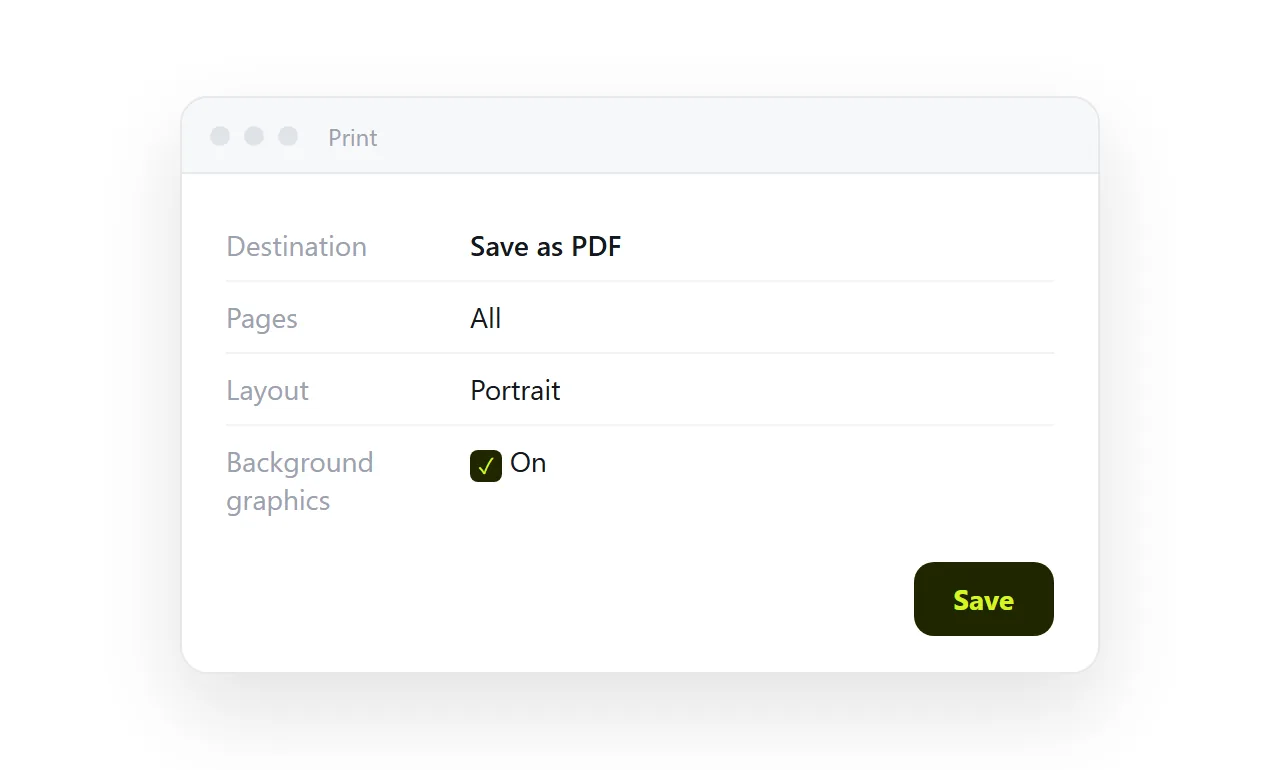
Export from the same page with a print stylesheet. Lead with the link; send the PDF when someone asks.
In NOS the deck is a document at a fixed address, and the text on each slide is clickable text. Updating this month's figure is typing over it — and every link already sent is showing the updated deck.
Read versus presented
| Presented | Read | |
|---|---|---|
| You are narrating | Yes | No |
| Slide titles can be topics | Yes | No — they must state the point |
| Dense figures are fine | You explain them | Each needs its base on the slide |
| Screen | A projector | A phone, usually |
| Order is controlled | By you | By them; they skip |
| Happens how often | Once | Many times, forwarded |
The right column is the one that decides outcomes, and it is the one a deck file serves worst.
Appendix pages
A short main deck plus separate detail pages — metrics, team, terms — is only practical when pages are cheap to make. Publishing a page is a paste, so the main deck stays at eight slides and the person who wants the cohort breakdown follows a link.
Correct a figure afterwards and every link already sent shows the correction, which is the part a PDF cannot do — see PDF versus a web page.
Numbers that survive a forward
An investor forwards the deck to a partner with one line: "look at slide four". Slide four has to stand on its own, which means the figure, its base, its period and its source on the same slide.
A number with no base is a number the partner discounts; a number with "n = 30 teams, Q2 to Q3 2026" under it is one they can check and repeat in the meeting you are not in.
Building the pitch deck as a page: 4 steps
- Size slides to the screen and cut each to one idea.
min-height: 100svh,clamp()type, at most 18 words, the figure large with its base under it. - Put the reading order on the page. A one-line contents at the foot of each slide, so the forwarded reader knows where they are and what is left.
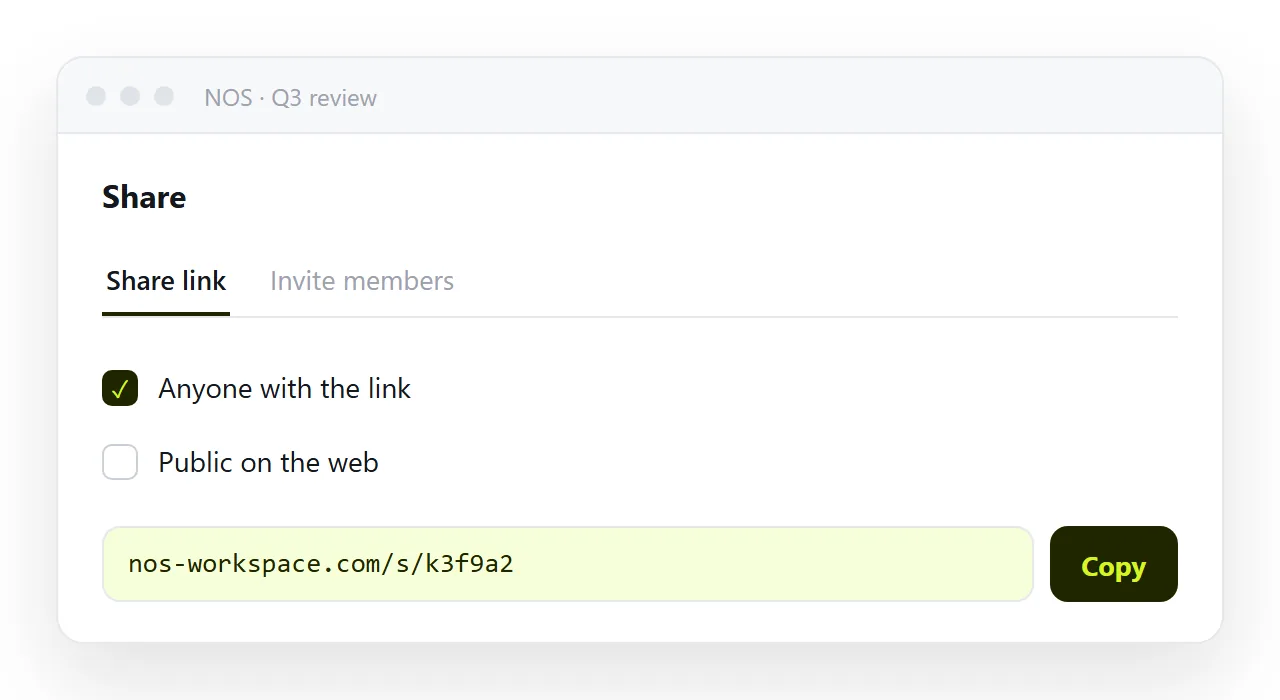
- Paste the deck into a NOS document and share the link. Share, then Share link, then Create link. Unlisted, and the same address for the room and for the forward. Turning HTML into a link is this step.
- Export a PDF from the same page for anyone who asks. Print stylesheet, Save as PDF, a dated file name. The link stays the master, with the corrected figure already in it.