A house manual is the answers to everything a guest asks, at one address they can reach from the fridge door in four seconds.
Done properly it removes most guest messages, which is the actual measure of whether it works.
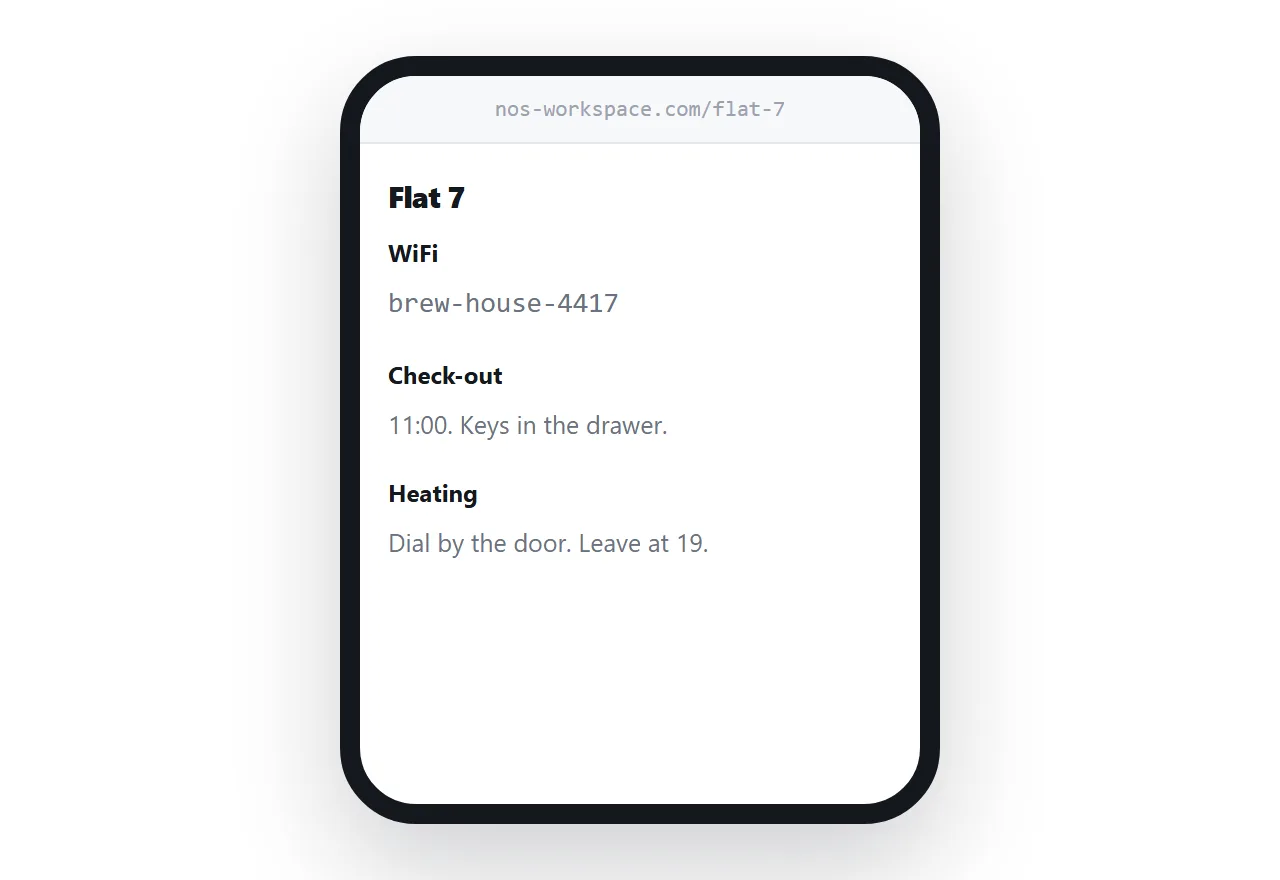
This guide covers what goes first, where the code goes, and how to write for someone standing in a kitchen.
The three things that cause the messages
Across almost every listing, the same three questions produce most of the contact.
The wifi password. Asked within ten minutes of arrival, every single time.
Check-out time and what to do with the keys. Asked the night before, usually late.
How the heating or the shower works. Asked whenever it is cold or the shower does something unexpected.
Put those three at the top, above everything else, visible without scrolling. The tour of the neighbourhood and your recommended restaurants can be below. They are nice; these three are why the guest opened the page.
Where the guest is standing
The old approach is a printed folder on a table. It gets glanced at on arrival and never opened again, because when the question actually arrives the guest is somewhere else in the house holding a phone.
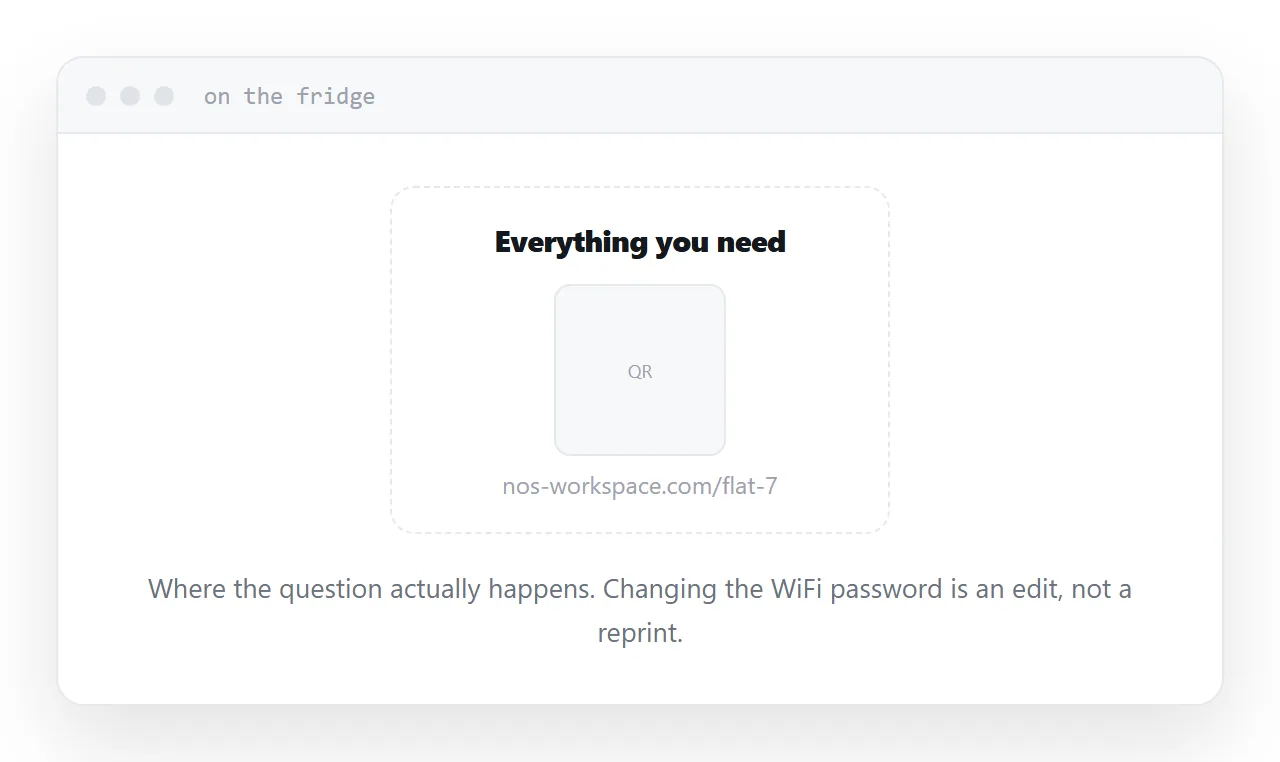
So put the address where the questions happen. A small card with a QR code on the fridge, inside the front door, and by the boiler or the thermostat.
Point that code at a permanent address. When the wifi password changes, you edit the page and every card in the flat is still correct. If the code encoded the password itself, you would be reprinting.
| Printed folder | Address with a code | |
|---|---|---|
| Found at 11pm | In a drawer | On the fridge |
| Wifi password changed | Reprint | Edit the page |
| Searchable | No | Yes |
| Guest can read it before arriving | No | Yes |
| Costs to update | Printing | Nothing |
Write for someone standing up
This is not a document. The guest is on their feet, holding a phone, mildly irritated.
Short headings they can scan. One fact per line. No introductions and no paragraphs of hospitality language before the information. Numbers and codes in a font where zero and capital O are distinguishable, and long enough to read without zooming.
If something in the flat is genuinely awkward, say so plainly and say what to do. The shower runs cold for thirty seconds is better hospitality than a guest deciding the boiler is broken at midnight.
Let the guests write it
The manual is not something you finish. It is built from the questions you receive.
Every time a guest messages you with something, add the answer to the page. After a season of this the messages drop to almost nothing, because everything anyone has ever wondered is already there.
Keep it honest. The bin day, the neighbour's dog, the front door that needs lifting slightly. Guests forgive quirks they were warned about and review quirks they discovered.
One more use for it
Send the address with the booking confirmation, before arrival.
Guests read it on the journey. They arrive knowing where to park, which door, and how the lock works, which removes the other cluster of messages: the ones from someone standing outside your building.
Closely related: How to share WiFi details as a link, and How to put a menu at a link for the adjacent problem. Making interactive content with a visual tool is also close.
Put it at an address
Lead with wifi, check-out and heating, put a code where the questions happen, point it at a permanent address, write for someone on their feet, and add every question you get.
Then the phone stops buzzing at eleven at night.