A monthly report is opened, skimmed for about twenty seconds, and closed. Building it for those twenty seconds makes it more useful, not less.
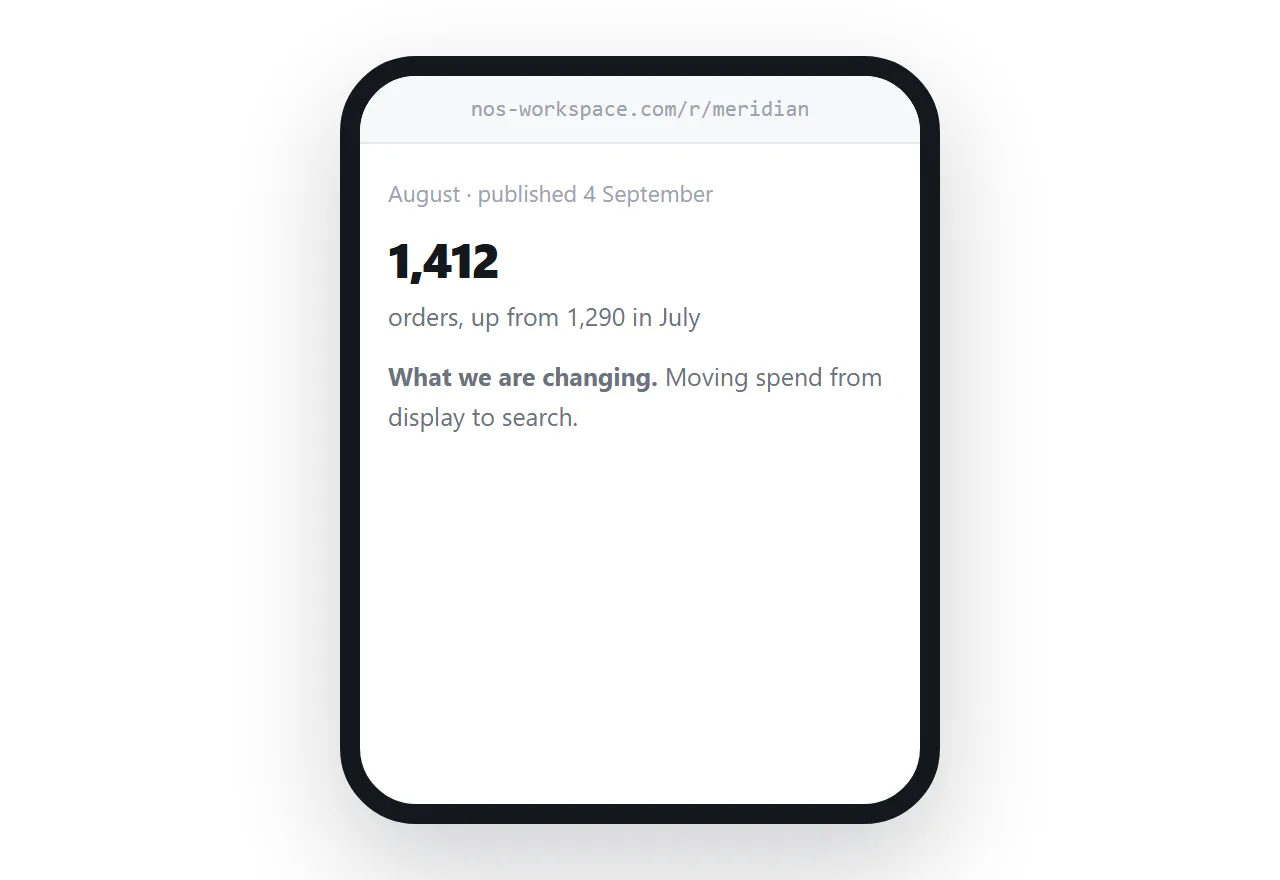
This guide covers what goes first, the structure, and reporting bad months.
What gets read
The headline number. Whether it went up or down. Whether anything is wrong.
That is the twenty seconds. Everything below it is read by somebody occasionally, usually when a decision is being made or a budget is being reviewed.
So the top of the report is those three things, in plain language, with the comparison stated rather than implied.
Then what you are doing about it. A report that presents numbers without a decision is a receipt for work, and clients read it as one.
One address, months stacked
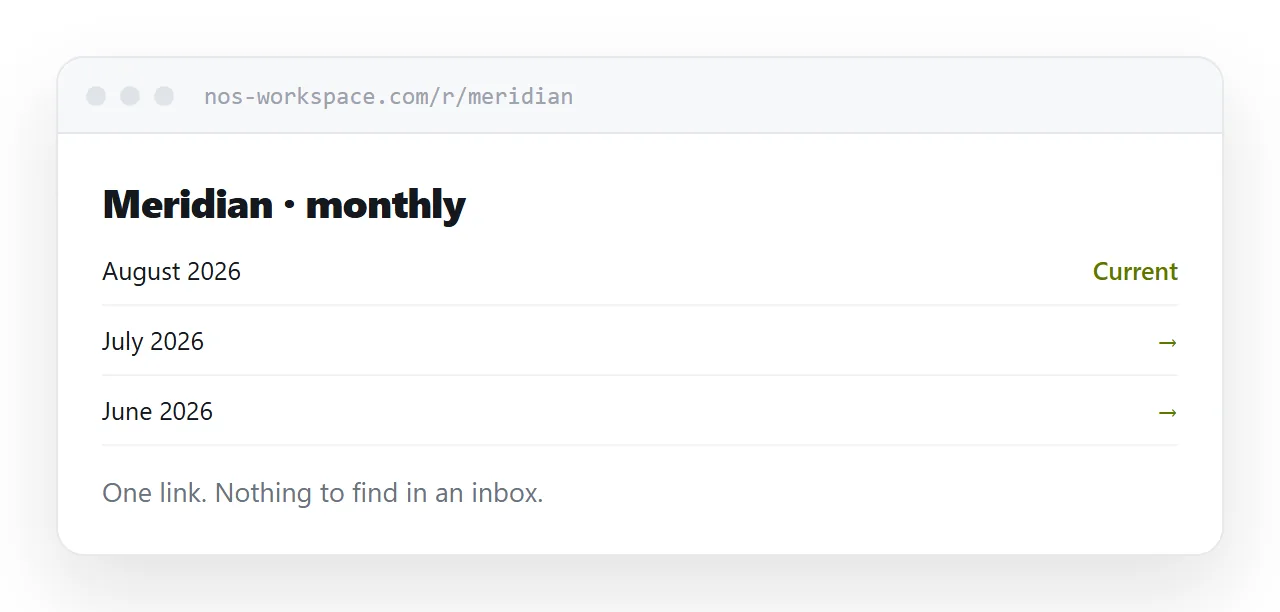
Instead of a new attachment each month, keep one address per client.
Current month at the top. Previous months below, collapsed or listed. The client has one link, in one place, that always shows the latest and keeps the history.
That removes the recurring exchange where a client cannot find the report from two months ago, and it means they can compare without opening three files.
| Monthly attachments | One address | |
|---|---|---|
| Finding an old month | Search the inbox | Scroll down |
| Comparing months | Open several files | One page |
| Reading on a phone | Downloads | Opens |
| Correcting a figure | Reissue | Edit |
| You know it was read | No | Yes |
Report bad months first
Something went down. A campaign underperformed, a metric moved the wrong way, a target was missed.
Lead with it, state it plainly, say why, and say what changes.
Reports that explain good months in detail and pass over bad ones quickly are noticed within about three months, and after that nothing in them is fully believed. The credibility of every good report depends on how the bad ones were handled.
Clients also find out anyway. Hearing it from you first is the difference between a professional relationship and an awkward one.
Same day every month
Pick a day and keep it.
Predictability removes the chasing. A client who knows the report arrives on the fifth does not email on the third.
If the report will be late, say so before the day rather than after. Silence on the expected day is read as a problem.
Keep it short
One screen of summary. Detail below for the people who want it.
Long reports are frequently long to demonstrate effort. Clients experience that as work they have to do, and the demonstration fails.
A short report with a clear conclusion reads as someone who understands the work well enough to say what matters.
Two neighbouring cases are worth a look: HTML client reports as pages, one address per period and How to open an HTML report.
Put it at an address
Lead with the number and the direction, keep one address per client with months stacked, report bad months first, send it on the same day, and keep the summary to one screen.
Then the twenty seconds a client gives it are spent on the thing that matters.